And how can you stop losing it?
It's frustrating enough to lose an earring, but when it's always the one from the same ear, you might start wondering why.
Perhaps you've found an earring caught in your scarf or discovered one missing when you get home. Sometimes it's down to a loose fastening. Other times, the way an earring sits in your ear or something as ordinary as brushing your hair can be responsible.
Why does the same earring keep coming loose?
The first thing to check is the fastening. Butterfly backs, commonly used on stud earrings, can gradually loosen with wear. One may still grip the post firmly while the other slides off with very little resistance.
Your piercings may also be slightly different. Most people's ears aren't perfectly symmetrical, and one piercing might sit at a different angle or have stretched over time. This can affect how an earring hangs and how easily it gets caught.
Then there are everyday habits. Do you tuck your hair behind the same ear? Wear headphones regularly? Pull a scarf over your head? Any of these could catch an earring and loosen it without you noticing.
Hoops and drop earrings have their own problems. Hinges can wear, clasps may stop closing properly, and a bent wire can make an otherwise secure earring easier to lose.
How can you stop earrings falling out?
Start by comparing both earrings. Does one butterfly back slide along the post more easily? Does one hoop click shut while the other doesn't? Even a small difference is worth investigating.
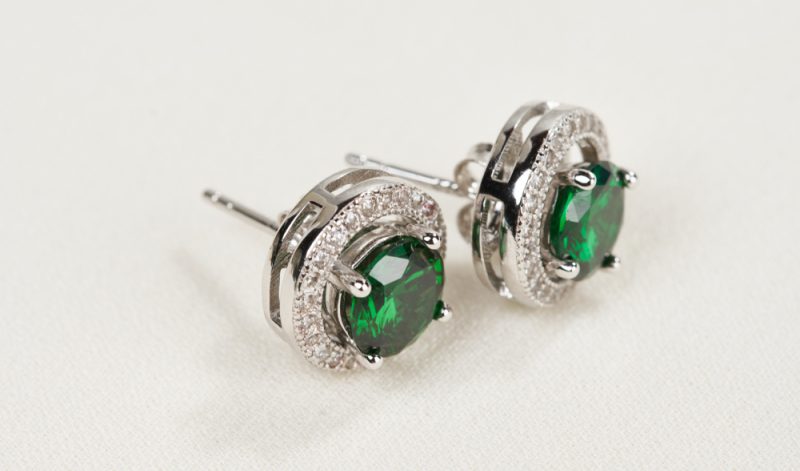
For stud earrings, you could consider locking backs, particularly for valuable diamond or gemstone earrings. Screw backs are another possibility, although they require compatible threaded posts.
For some earring styles, a small silicone stopper can provide extra security. These are particularly useful for fishhook-style (also known as shepherd’s hook-style) earrings, as the stopper slides onto the wire behind the earlobe to help prevent the earring slipping out.
A jeweller can advise on the most suitable fastening for your earrings. If you wear heavy earrings, try switching to lighter styles occasionally. Repeated pulling on the earlobes can stretch piercings, making some earrings sit less securely.
And while it's tempting to sleep in your favourite studs, removing earrings before bed can help avoid unnecessary pressure and snagging, provided your piercings are fully healed.
When should you visit a jeweller?
If a fastening repeatedly comes loose, don't wait until the earring disappears. A jeweller may be able to adjust or replace a worn back, repair a clasp or replace a damaged post.
For expensive or sentimental earrings, having the fittings checked periodically is a sensible precaution.
Does jewellery insurance cover losing one earring?
Losing one earring can be particularly upsetting when it belongs to a valuable pair, especially if it's impossible to find an exact replacement.
Assetsure offers specialist earring insurance on an All-Risks basis, including cover for accidental loss, accidental damage and theft. It also includes Pairs and Sets cover. If one earring is lost or damaged and cannot be repaired or replaced any payment made will take account of the increased value.
Cover does not extend to unexplained disappearance, and other exclusions and restrictions apply.
If it's always the same earring that comes loose, it's worth following our tips above or seeking the advice of a jeweller. A few simple precautions could save you a lot of frustration and expense.