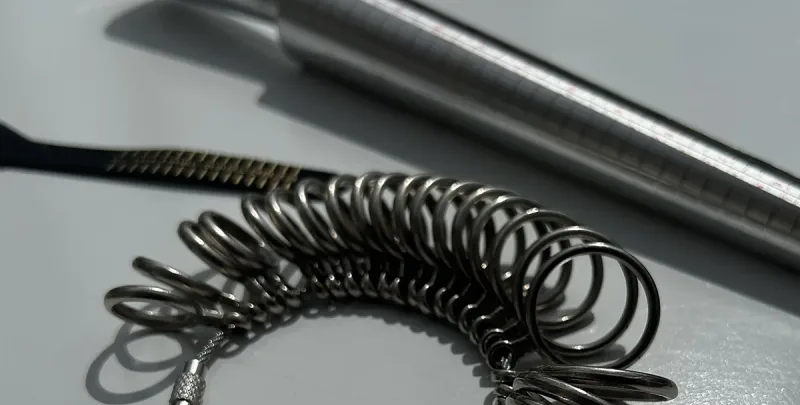
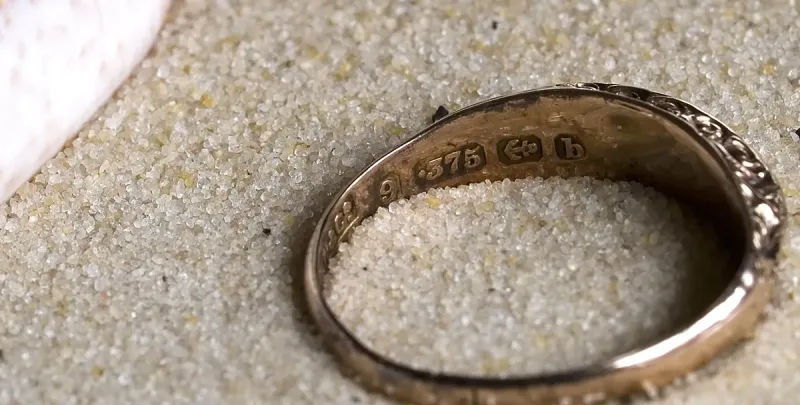
Many jewellers recommend ring resizing if a ring regularly slips, spins excessively, becomes uncomfortable or difficult to remove. Changes in weight, age, temperature, lifestyle and health can all affect finger size over time.
Because these changes often happen gradually, many people do not realise their ring no longer fits properly until something draws attention to it. Perhaps it spins around every time you wash your hands, catches on clothing, or feels as though it could disappear down the plughole at any moment.
On the other hand, a ring that once slipped on easily may suddenly become uncomfortable or difficult to remove.
Both situations can be signs that a resize is worth considering.
How should a ring fit?
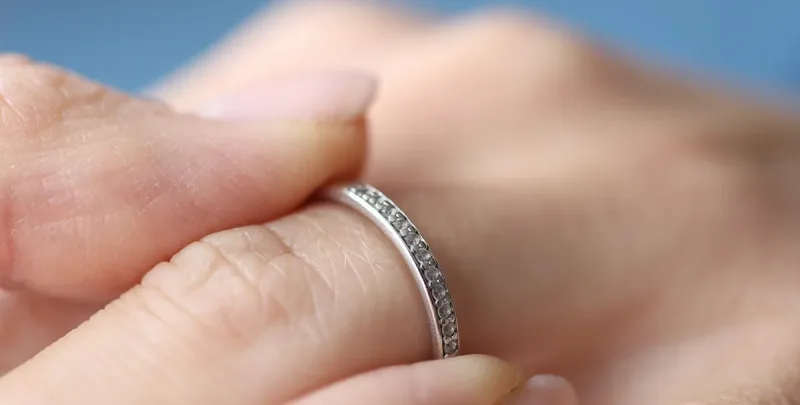
A well-fitting ring should slide over your knuckle with a little resistance but sit comfortably at the base of your finger. It should feel secure without restricting circulation or causing discomfort and should be removable without excessive force.
- Signs your ring may be too loose
If you constantly find yourself adjusting your ring, it may be too large. Common signs include excessive spinning, slipping when your hands are cold or feeling as though the ring could fall off during everyday activities. - Signs your ring may be too tight
A ring may be too small if it is difficult to remove, leaves deep indentations or causes discomfort. Some people also notice the finger bulging around the band.
Why do rings stop fitting properly?
Many jewellers say one of the most common reasons for resizing is simply that our bodies change. Weight fluctuations, pregnancy, ageing, arthritis, medication, fluid retention and seasonal temperature changes can all affect finger size.
Can all rings be resized?
Not always. Many gold, platinum and silver rings can be resized by a professional jeweller. However, some eternity rings, tension-set designs and rings made from materials such as tungsten, titanium or ceramic may be difficult or impossible to resize.
Making a ring smaller
Having a ring made smaller is typically easier than making it bigger. In most cases, a jeweller will remove a small section of metal from the band before carefully rejoining and polishing it. If you decide to have a ring reduced in size, it is often worth asking whether the removed metal can be returned to you.
While the amount may be small, it could prove useful if the ring needs resizing again in the future, particularly if it is made from a precious metal such as gold or platinum. Some jewellers automatically return the metal, while others may not unless specifically requested.
Making a ring larger
Making a ring larger is often more complicated because additional metal usually needs to be added to the band. The jeweller must source matching metal, carefully add it to the band, and ensure the finished ring retains its original strength, shape and appearance. This can be more challenging for rings with intricate designs, engraved details or gemstone settings, as these features may need to be adjusted during the resizing process. As a result, increasing a ring's size is often more labour-intensive and may cost more than making it smaller.
In some cases, a wedding band or other simple band that is a bit tight can be “stretched” by a jeweller, depending on the construction of the ring and the metal. However, this is only suitable for certain plain bands and generally allows for a small increase in size.
How much does ring resizing cost in the UK?
Costs vary depending on the metal, design, number of gemstones and whether the ring needs to be made larger or smaller. Complex designs generally require more work than plain bands.
Does ring resizing affect jewellery insurance?
Ring resizing itself does not usually affect jewellery insurance, although policy terms and insurer requirements can vary. However, a ring that no longer fits securely may be more vulnerable to accidental loss. If you have recently resized a valuable ring, it may also be worth reviewing any valuation documents and checking your jewellery insurance remains suitable for your needs.
Disclaimer
This article is intended as a general guide only. Resizing options depend on the design, metal and condition of the ring. Always seek advice from a qualified jeweller before making alterations to valuable jewellery. Insurance terms, conditions, limits and exclusions apply.