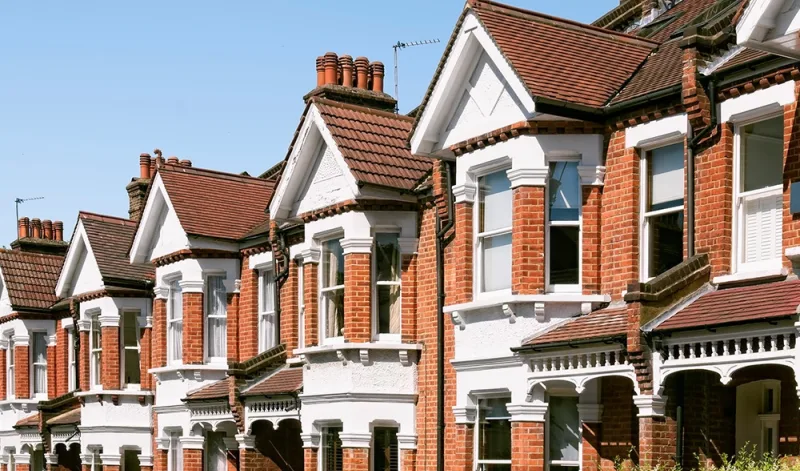
Before the introduction of the ubiquitous tower block at the end of the Second World War, social housing in the United Kingdom consisted mainly of blocks of flats known as tenement buildings. In very general and sometimes unfair terms, the word tenement block is used to describe any block of flats that is of a more modest design and build quality, although in many cases this is far from the truth. Many tenement blocks of flats have stood the test of time, particularly in Scotland, where often quality materials such as sandstone have been employed in the construction. Here the word tenement is used to describe any block of flats that does not have a lift and shares a common central stair case. What was often constructed as social housing is now home to a broad spectrum of society, many of the blocks or individual flats are in private ownership and some have achieved listed status, preserving their architectural merits for future generations.
There is evidence of tenement blocks being in existence since the 16th century, however changes in the social and economic climate in the 19th century, brought about a need for more social housing and thus was born a strong demand for this type of building. A number of factors contributed to an increased demand in social housing at this time. Firstly, this was the beginning of the Industrial Revolution in Great Britain, a time of unprecedented change. The nineteenth century also saw a huge growth in the population. The fundamental reasons for this are unclear but it is possible that advances in science meant that more children were surviving infancy to reach adulthood and thus families were becoming larger in general. People also were living longer in to old age and Britain’s immigrant population had started to swell with people looking for work or, as is still the case today fleeing foreign tyranny or disaster. Large numbers of people had started to arrive in Britain from Ireland, attempting to escape famine and hardship.
By the end of the century, the population of Great Britain had trebled, more housing was required and the bulk of it in the ever burgeoning cities. Until the start of the Industrial Revolution, Britain had been a largely agrarian society, that is to say that our way of life was based on agriculture and this was the main means of support in the towns and villages of the country. People worked the land and it tended to provide for almost all needs, communities were often insular and moving around was restricted for business or trade reasons. This form of organization in fact has been in existence for almost all of history with the expectation of the post industrial revolution years. Changes in population density at or around this time led to an increased need in social housing and tenement blocks of flats fitted the bill. Although the population was rising, in certain areas it was actually decreasing as people left their previous occupations as land workers and headed to the cities for what was often seen as a better way of life and employment and the chance of better rates of pay, although it must be added not always better working conditions.
The industrial and mining centers of the country started to see large influxes of workers, either skilled or unskilled, not only from this country but from overseas as well. The perception was that life would be better, often though,it was exactly the opposite, too many people chasing too few jobs led to drop in wages, if you didn’t like it, there would be someone else to take your place. The effect of low wages meant that in the main, workers had to be accommodated near to the place of work and thus there was a scramble to obtain cheap housing, shortages, led to overcrowding and a variety of other well documented problems. In no other part of the country were these conditions more magnified than London, here the population grew at a record rate.
Tenement blocks of flats were constructed as quickly as possible to meet demand, but they often had a fearsome reputation and blocks of flats in the east of London that today reach fantastic sale prices were often home to some of the most wretched, lower echelons of society. As well as these tenement blocks or model dwellings as many became known, larger houses were often converted in to individual flats. Owners were quick to seize on the need for accommodation and many buildings were hastily converted in to individual units that could be rented out. Often tenants would take a whole building and would then sublet part, these rental agreements were mostly informal and common lodging houses abounded, where rooms were available often on a per day or night basis. Large houses were turned into flats and the landlords who owned them, were not concerned about the upkeep or the condition of these dwellings, no value was seen in upkeep or repair probably as the renters had such low expectations and the laws of supply and demand dictated that what ever the condition of your property, in all probability, you would be able to find a tenant. Tenement blocks of flats and other converted buildings soon became what can be best described as slum property, although sanitation did improve slightly over the years, by the time the second world war arrived, many were in an appalling state of dilapidation. If there is any positive at all to be gleaned from the effects of aerial bombing in the second world war, it is that it helped clear away large tracts of this property from our landscape. The government and local authorities had to move quickly to find replacements and thus you could say that the tower block was designed out of necessity.