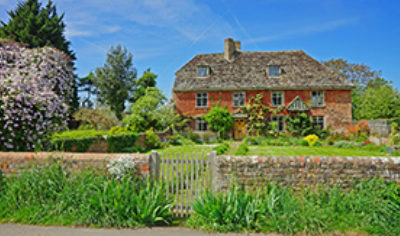
Purchasing a property as a Holiday Home for personal usage or as a investment is becoming more popular. Many people are waking up to the tax advantages of this type of property purchase and the fact that you have the added bonus of being able to use your holiday home cottage for your own or your families holidays. However pretty your dream holiday home, like any financial decision, you should only enter in to it with your eyes wide open in possession of all the facts. Generally speaking, this type of purchase should only be considered as a long term arrangement, it is highly unlikely you will make any money in the initial years. To assist you with the decision making process, here are some pointers for you with regard to the financial aspects of holiday home purchase.
The Council Tax as with your own home, the amount of council tax that you will be required to pay will very much vary from area to area and is also dependent on the value of your property. Homes are banded depending on valuation and from this, the local authority will calculate your council tax charge. Many areas have concessions for second homeowners, a number allow a discount of up to 50% of their standard rates but in the main you should expect to pay up to 90% of the usual annual amount. Please remember that the local authority will want you to pay council tax regardless if the property is occupied or not. For properties that are available to let for 19 weeks or last per annum, you will have to pay the local council tax. For periods of 20 weeks or more, you will be taxed under the local business rates. It is probably best to find out your tax position under both systems so as you can calculate the worst case scenario. Although many people tend to get a bit worried when the term business rates is mention, in fact you may find this is the best option for you. Some authorities can allow small business relief and this can be as high as 50%. If you are going to apply for business rates, make sure your property is available for letting for in excess of 20 weeks of the year.
Value added Tax At the time of writing then threshold for VAT is £60,000. If you earnings from your holiday home rental business exceeds £60,000 then you will have to register and charge VAT on your lettings. Many people are content with one or two properties and in this scenario it unlikely that you will receive more than £60,000 per annum. VAT is a complex issue and one that should not be dealt with, without first seeking advice from a qualified accountant. Many people have become confused over the issue of Vat and ended up charging it when they shouldn’t and visa versa.
Capital Gains Tax You are allowed to sell your own private family home without Capital Gains tax, however when you sell a second home or holiday home, then generally speaking, you will have to pay capital gains tax. The rules relating to capital gains tax on Holiday Homes are fairly complicated and should you be able satisfy various conditions, you may qualify for taper tax relief which could save you thousands of pounds. This again is a specialised area and you would be advised to seek professional help from your accountant before making any decision to sell your property. Whilst on the subject o0f buying property for investment, sometimes a chat with an Independent Financial advisor, before you start to add property to a portfolio may pay dividends. Assetsure work very closely with financial advisors that are used to helping clients plan for the futures with a particular emphasis on property purchase.
Inheritance Tax If your property is solely used as for Holiday Lettings then in all probability it will qualify as a business asset with regard to inheritance tax. Of course rules relating to taxation frequently change and your accountant will be able to help you with this matter. At the present moment inheritance tax is charged at 40 % on the amount of the estate valued at over £285,000. However if the property qualifies as a business asset then the tax relief is 100 %. It should be noted that not all holiday let property will qualify for the 100 % tax relief, however that said, the Inland Revenue advanced practice manual suggests that where a property can be identified as a business asset, then the relief should be given.
Taxable Profit If your holiday home is located in the United Kingdom, you will be allowed to deduct certain expenses and tax allowances from your rental income. If you own more than one property, you can pool your expenses together to work out your taxable profit. The government produce a list of qualifying rules for your income to be treated as Holiday Let Income. The current rules are as follows.
- The Holiday home must be in the United Kingdom.
- It must be fully furnished.
- It must be available to be let as a holiday home for no less than 140 days a year.
- It must be let as a Holiday Home for at least 70 days in one year
- It must be let on a short term basis of no more than 31 days.
- It must be let as a Holiday home for at least 7 months of the year.
If you meet all of the above, you will be able to let the holiday home for whatever period you like in the remaining 5 months. If however a let is in excess of 31 days in this final 5 month period, then it will not qualify as a holiday let.
Allowable Expenses – Knowing what you can and cannot claim for from your holiday let business is vital and there are a number of times that you are currently allowed to claim for. A good rule of thumb is that if the expense is solely for the use as a holiday let then you will be able to claim against tax. Remember always to keep your receipts.
- Accountancy Charges– Amounts payable in respect of the preparation of your holiday home business accounts although you not allowed to claim for amounts charged for preparing your tax return.
- Advertising. Any successful Holiday Home rental business needs advertising and you can claim for the cost of advertising your property on property websites, magazines etc. You may also claim for the cost of printing brochures and for the cost of postage.
- Rent/Council Tax/Insurance. All of these items you can claim against tax. Some ground work on your part to make sure that the council tax rather than the rating structure better suit your needs.
- Interest – Interest you have to pay against loans acquired to improve the property to making ready for letting together you any interest payable on loans to purchase furniture etc foe the property.
- Heating & Lighting– You can claim for you gas, electricity and any fuel charges relating solely to your holiday let property. If the property adjoins your own, then you can only claim for the portion that is let.
- General Repair.– To be successful, you will have to keep the property in tip top condition, you are allowed to claim for the cost of general maintenance including painting & decorating.
- Additional Services. You may be able to claim for any additional services that you provide at the premises such as a gardener or caretaker, you will need to speak to your accountant about this.
- Outside– If you cottage has a garden, you can claim for the cost of it’s upkeep or for stocking it with plants etc in preparation for letting.
- Crockery/Cutlery/Bed Linen– These are all items that you can expect to replace on a regular basis, they all have a limited life especially in a holiday home, you can claim for them against tax.
- Phone Bills.- If you have to use your own telephone to make calls with regard to the letting of your cottage.
- Cleaning items. Any consumables purchased for use at the holiday home are claimable, items would include, soap, washing up liquid, dusters, dishcloths, toilet cleaner, bleach, toilet roils, light bulbs, bin liners etc.
- Travelling Expenses– You may claim an amount based on your annual mileage to and from the property, providing of course it is in connection with the business. Your accountant will be able to advise you on this.